Shopify COO April 2026: 13 Operators Interviewed
13 Shopify operators, interviewed and quoted verbatim: how they actually run their brands in 2026, by theme.
Hylke Reitsma is co-founder of Forthsuite and a supply chain specialist with 8+ years of hands-on experience at Shell, Verisure, and Stryker. He holds an MSc in Supply Chain Management from the University of Groningen and writes practical guides to help e-commerce teams run leaner, faster supply chains. Selected by Replit as 1 of 20 founders for the inaugural Race to Revenue Cohort #1 (2026) and certified as a Replit Platform Builder.
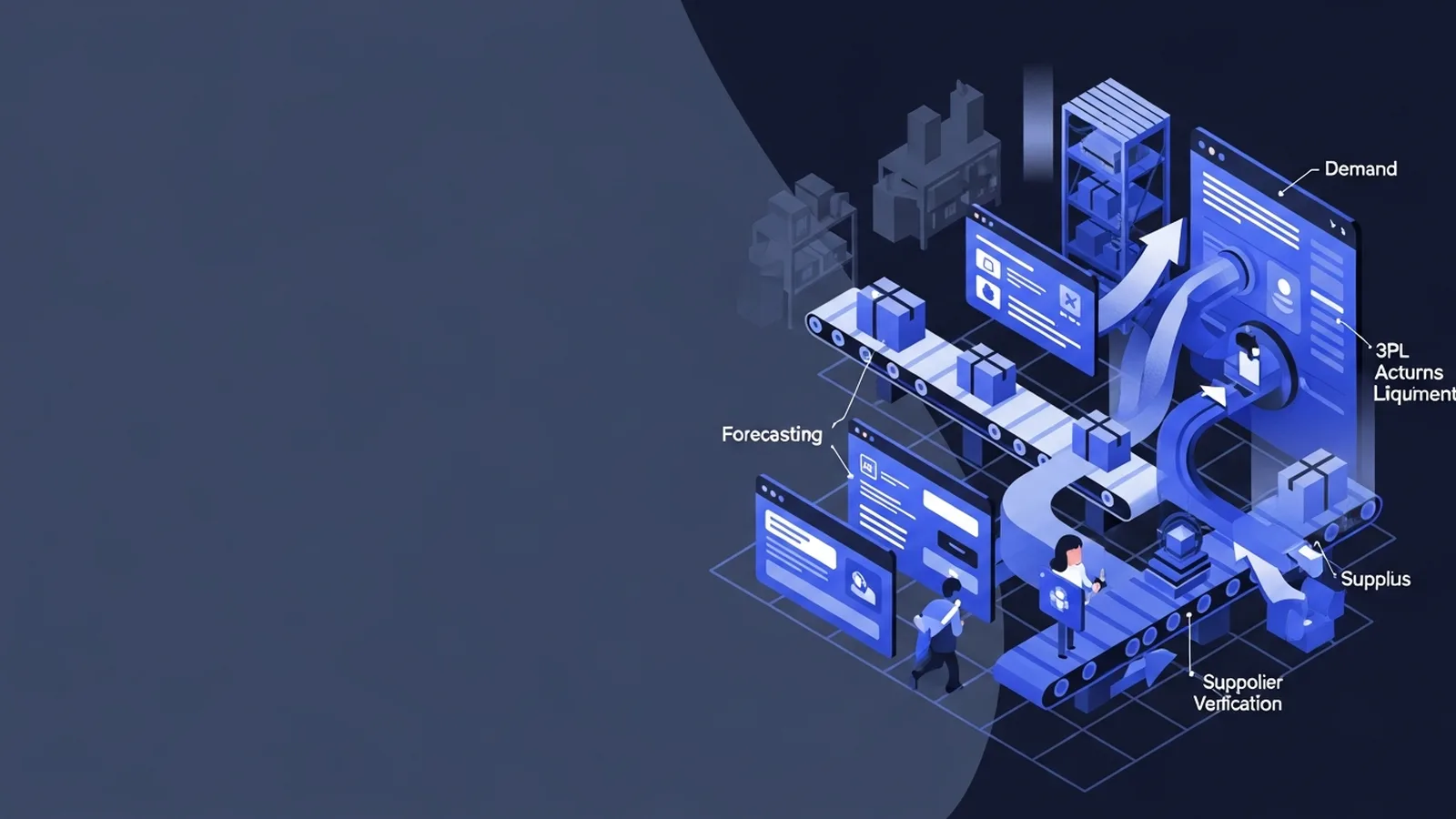
TL;DR: Thirteen Shopify operators shared candid insights about their 2026 workflows, covering everything from inventory management and customer acquisition to team collaboration and tech stack decisions. Forthsuite helps Shopify operators centralize and streamline the cross-functional operations that real brands rely on to scale efficiently.
Last updated: July 2026
April 2026 — primary research, on the record. Updated April 22 to align the per-product sections with the corrected Forthsuite product mapping.
TL;DR — five things 13 operators told us
| Theme | Operators raising it directly | Core signal |
|---|---|---|
| Inventory accuracy and stockouts | 4 of 13 | MOQ, lead-time and channel interactions break manual plans. |
| Multi-channel operations | 4 of 13 | Inventory and fulfilment visibility is fragmented by channel. |
| Supplier reliability and sourcing | 5 of 13 | Long-standing sourcing remains fragile, opaque and cash-heavy. |
| Returns management | 2 of 13 | Reverse logistics and RMA gaps erode margin. |
| Overstock and excess inventory | 4 of 13 | MOQ and demand noise create surplus that is difficult to clear. |
Who we talked to
Thirteen named operators across five verticals and four countries. Every card below links to that operator’s business and to the strongest companion piece drawn from their conversation.
a Shopify nutrition brand co-founder
“there is complexity in terms of how like these POs get placed... There's obviously different lead times by manufacturer, different lead times by SKU, different sales velocity by SKU across Amazon and Shopify which all…”
a Shopify apparel operations lead
“~3/4 launches succeed, but surplus leads to clearance issues, brand reputation risks, and contract limits on reselling leftovers”
a Shopify supply-chain lead
“Issues with stock across warehouses affecting availability.”
a multi-store inventory manager
“owning a 3PL (like an intermediate storage location) in the US based on customer locations to be able to ship fast would be a real competitive advantage. Eg. you can ship in 1-2 days if you know most of your customers…”
an ecommerce leader at a beauty brand
“I would definitely love something automated like we're in 2026. I can't believe I still have to do an export of my sales from Shopify, do an export of the stock the inventory at the 3PL.”
a multi-store dropshipping operator
“The biggest issue is policy violations, especially with Google Merchant Center (GMC). Almost every store wants to sell through Google, but Google has strict rules (max 3–5 days delivery, etc.) that often conflict with…”
a freelance Shopify operator
“50–60% of orders become RTO. Prepaid to COD ratio is roughly 1:9 (only 10% prepaid). When a customer refuses the package, the business pays the full shipping cost both ways + lost ad spend + order management cost.”
a Shopify cosmetics retailer
“He would like to see the reorder point, trendline and discounts.”
a Shopify apparel founder
“The fabric is my, the bane of my existence because. When that's not organized, then we struggle.”
Gordon Belch
a Shopify food and beverage brand leader
“I feel like people over complicate them [inventory tools]. It's like, how much inventory do I have today? Or if it's a bundle, like, how much could I have of this bundle based on my inventory today? And then it's like,…”
a Shopify supplement brand founder
a Shopify founder
Inventory accuracy and stockouts
Forecasting that knows about MOQs, lead times, sales velocity per channel — and the cash hole when it doesn't.
We heard about this from 4 of the 13 operators. The pattern below is the strongest signal in the corpus for this theme — verbatim, with the conversation context that prompted each quote.
“The fabric is my, the bane of my existence because. When that's not organized, then we struggle.”
Context: Identifies fabric inventory as THE critical pain point, not garment inventory
“So we've tried a couple apps, for inventory management and for production management. One of them was called Katana, which was actually pretty great until we had way too many orders for it to support.”
Context: Shows past investment in solutions; system broke under scale (500 orders)
“there is complexity in terms of how like these POs get placed... There's obviously different lead times by manufacturer, different lead times by SKU, different sales velocity by SKU across Amazon and Shopify which all needs to be taken into consideration... And then obviously supplier MOQs... some of the systems don't always understand that”
Context: Specific technical requirements that existing tools fail to meet - actionable product feedback
“I think that's where oftentimes founders, maybe they go out and raise money just to finance inventory. Which I think is a terrible”
Context: Shows macro trend: poor inventory management forces unnecessary fundraising. Suggests large TAM problem.
“He would like to see the reorder point, trendline and discounts.”
Context: Specific feature requests indicate deep understanding of their needs and concrete use cases they want to address
“I feel like people over complicate them [inventory tools]. It's like, how much inventory do I have today? Or if it's a bundle, like, how much could I have of this bundle based on my inventory today? And then it's like, all right, what's my forecast? When am I gonna run out? Like, some people just have like, oh, it's at these. This one, it was. It was like, so advanced. Or they were trying so hard to be so advanced. It was like, this is your, like, expected day... no, here's my forecast. Here's what I need. Like, what am I gonna run out? Like, is more what I want to know.”
Context: Clear articulation of desired product simplicity vs. feature bloat; strong signal about what matters to him
What it tells us: the operators above are not edge cases — they sit across 4 different businesses and multiple countries, independently describing the same shape of problem.
Multi-channel operations
Running one catalog across Shopify, Amazon, retail, wholesale and 3PL warehouses without letting any one channel starve.
We heard about this from 4 of the 13 operators. The pattern below is the strongest signal in the corpus for this theme — verbatim, with the conversation context that prompted each quote.
“there is complexity in terms of how like these POs get placed... There's obviously different lead times by manufacturer, different lead times by SKU, different sales velocity by SKU across Amazon and Shopify which all needs to be taken into consideration... And then obviously supplier MOQs... some of the systems don't always understand that”
Context: Specific technical requirements that existing tools fail to meet - actionable product feedback
“Issues with stock across warehouses affecting availability.”
Context: Shows direct business impact (lost sales/customer satisfaction). Implies multi-warehouse complexity is creating real problems.
“owning a 3PL (like an intermediate storage location) in the US based on customer locations to be able to ship fast would be a real competitive advantage. Eg. you can ship in 1-2 days if you know most of your customers are in California”
Context: Reveals core insight that supply chain optimization should be tied to sales/customer data. Shows understanding of logistics ROI and customer-centric fulfillment strategy. Direct business behavior insight.
“I would definitely love something automated like we're in 2026. I can't believe I still have to do an export of my sales from Shopify, do an export of the stock the inventory at the 3PL.”
Context: Clear frustration with status quo and emotional language ('can't believe') indicates genuine pain point, not hypothetical
“No, I mean I'm kind of stuck with the 3PL where we sign with our inventory is such a big move to switch 3PLs.”
Context: Reveals constraint: cannot solve problem by switching providers. Must work within existing relationships
“there is complexity in terms of how like these POs get placed because there's, you know, the finished product but then we buy packaging maybe from a different supplier. So there's like components to like having a finished good ready to sell. There's obviously different lead times by manufacturer, different lead times by SKU, different sales velocity by SKU across Amazon and Shopify which all needs to be taken into consideration”
Context: Inventory forecasting complexity with multiple variables (lead times, MOQs, sales velocity across channels, component sourcing)
What it tells us: the operators above are not edge cases — they sit across 4 different businesses and multiple countries, independently describing the same shape of problem.
Supplier reliability and sourcing
Why even merchants with long supplier relationships still describe sourcing as fragile, opaque, and cash-heavy.
We heard about this from 5 of the 13 operators. The pattern below is the strongest signal in the corpus for this theme — verbatim, with the conversation context that prompted each quote.
“So we've tried a couple apps, for inventory management and for production management. One of them was called Katana, which was actually pretty great until we had way too many orders for it to support.”
Context: Shows past investment in solutions; system broke under scale (500 orders)
“there is complexity in terms of how like these POs get placed... There's obviously different lead times by manufacturer, different lead times by SKU, different sales velocity by SKU across Amazon and Shopify which all needs to be taken into consideration... And then obviously supplier MOQs... some of the systems don't always understand that”
Context: Specific technical requirements that existing tools fail to meet - actionable product feedback
“Struggling to fill full containers or combine orders across vendors (from China) to cut costs.”
Context: Indicates direct cost optimization need with measurable ROI potential (shipping cost reduction). Shows this is a real business problem with financial impact.
“There's got to be a better way at some point to patch them together. But right now it's just a spreadsheet and a production report.”
Context: Direct evidence of pain point and attempted workaround; indicates he's actively seeking solution
“Yeah, I'd rather just shop that around and get the best price... I'd rather just shop that around and get the best price”
Context: Shows willingness to optimize supplier costs; potential interest in supplier matching/comparison features
“The biggest issue is policy violations, especially with Google Merchant Center (GMC). Almost every store wants to sell through Google, but Google has strict rules (max 3–5 days delivery, etc.) that often conflict with supplier policies.”
Context: The #1 pain point is NOT inventory management—it's platform compliance and supplier policy alignment. This is a critical finding that suggests the core inventory app may not address a multi-store dropshipping operator's most urgent need.
What it tells us: the operators above are not edge cases — they sit across 5 different businesses and multiple countries, independently describing the same shape of problem.
Returns management
Reverse logistics, RMA workflow gaps, refund-vs-restock economics — the part of the operation that quietly eats the margin a forecast worked hard to protect.
2 of the 13 operators raised this directly in conversation. Their verbatim quotes are below.
“When onboarding a new supplier I always test them: small test order (sometimes payment on delivery or 50% deposit), check quality, delivery time, and return/refund policy. The three things I care about most are: Product quality, Delivery speed / reliability, Return & refund policy”
Context: Reveals specific supplier evaluation criteria. Suggests demand for supplier verification scoring system, but behavior shows he does manual testing (works for him).
“50–60% of orders become RTO. Prepaid to COD ratio is roughly 1:9 (only 10% prepaid). When a customer refuses the package, the business pays the full shipping cost both ways + lost ad spend + order management cost.”
Context: Quantifies the severity and financial impact of the RTO problem. Demonstrates deep understanding of the cost structure and business impact.
“Businesses usually just stop selling high-RTO products and switch to new ones, but you can't get below ~30% RTO in India if you offer COD. Without COD option, orders drop by ~70%.”
Context: Defines the constraint: COD is mandatory but broken. Shows businesses have accepted 30% RTO as inevitable and are not actively seeking solutions.
What it tells us: across 2 independent operators, the pain converges — the dedicated product cut for this area is linked at the bottom of this piece.
Overstock and excess inventory
Where the surplus comes from, what operators have tried in order to clear it, and the brand / contract / cash constraints that stop them from actually doing it.
4 of the 13 operators raised this directly in conversation. Their verbatim quotes are below.
“we had a lot of like inventory on shelf that wasn't sold through yet. And now we had to come up with, you know, hundreds of thousands of dollars to effectively pay for it, keep suppliers happy”
Context: Cash flow crunch from overstock/excess inventory tying up capital
“~3/4 launches succeed, but surplus leads to clearance issues, brand reputation risks, and contract limits on reselling leftovers”
Context: Quantifies problem frequency (1 in 4 launches fail) and reveals multiple pain points: demand validation, clearance challenges, and contract constraints. This is a core business risk.
“they would need permission from sales, so it would always be very important to speak to sales and be tight with sales in this process on their strategy as they are typically the decision maker”
Context: Critical insight into organizational decision-making structure. Supply chain tool adoption depends on sales alignment. Reveals that inventory/clearance decisions require stakeholder buy-in, not just planner autonomy.
“I need to see how much I need based on my past sales and the current inventory, how much I need to replenish... the problem is to replenish having out of stock or overstock or just the time that it takes me to do this task”
Context: Risk of stockouts and overstock due to manual, time-consuming replenishment decision-making
What it tells us: across 4 independent operators, the pain converges — the dedicated product cut for this area is linked at the bottom of this piece.
Continue reading by product area
Each of the five Forthsuite product areas has its own deep dive built from the same conversations:
- What operators told us about demand forecasting and stockouts
- What operators told us about sourcing and supplier reliability
- What 2 operators told us about returns management and the RMA workflow (starter edition)
- What 3 operators told us about 3PL matching and fulfilment-partner performance
- What 6 operators told us about overstock and liquidation
Methodology
Between February and March 2026 the Forthsuite team ran thirteen one-hour discovery conversations with named Shopify and Amazon operators across the US, UK, Australia and India. Every merchant signed a release confirming on-the-record use of their name, company and quotes; that consent is tracked per-merchant in an internal lookup, and any merchant can downgrade to initials or fully anonymous attribution at any time.
Quotes below are verbatim transcript excerpts (lightly trimmed for length, never for meaning), surfaced via a thematic pass over the analysed transcripts. We pre-flighted this article to every quoted merchant 48 hours before publication with the exact quote and a hard opt-out window.
Frequently Asked Questions
What 13 Shopify operators told us about how they actually run their brands in 2026?
Thirteen Shopify operators shared candid insights about their 2026 workflows, covering everything from inventory management and customer acquisition to team collaboration and tech stack decisions. Forthsuite helps Shopify operators centralize and streamline the cross-functional operations that real brands rely on to scale efficiently.
About the Author

Hylke Reitsma is co-founder of Forthsuite and a supply chain specialist with 8+ years of hands-on experience at Shell, Verisure, and Stryker. He holds an MSc in Supply Chain Management from the University of Groningen and writes practical guides to help e-commerce teams run leaner, faster supply chains. Selected by Replit as 1 of 20 founders for the inaugural Race to Revenue Cohort #1 (2026) and certified as a Replit Platform Builder.
LinkedIn