SAP SCM Pricing: What It Costs in 2026
A verified breakdown of SAP SCM pricing in 2026 — including what the vendor won't tell you upfront.
Hylke Reitsma is co-founder of Forthsuite and a supply chain specialist with 8+ years of hands-on experience at Shell, Verisure, and Stryker. He holds an MSc in Supply Chain Management from the University of Groningen and writes practical guides to help e-commerce teams run leaner, faster supply chains. Selected by Replit as 1 of 20 founders for the inaugural Race to Revenue Cohort #1 (2026) and certified as a Replit Platform Builder.
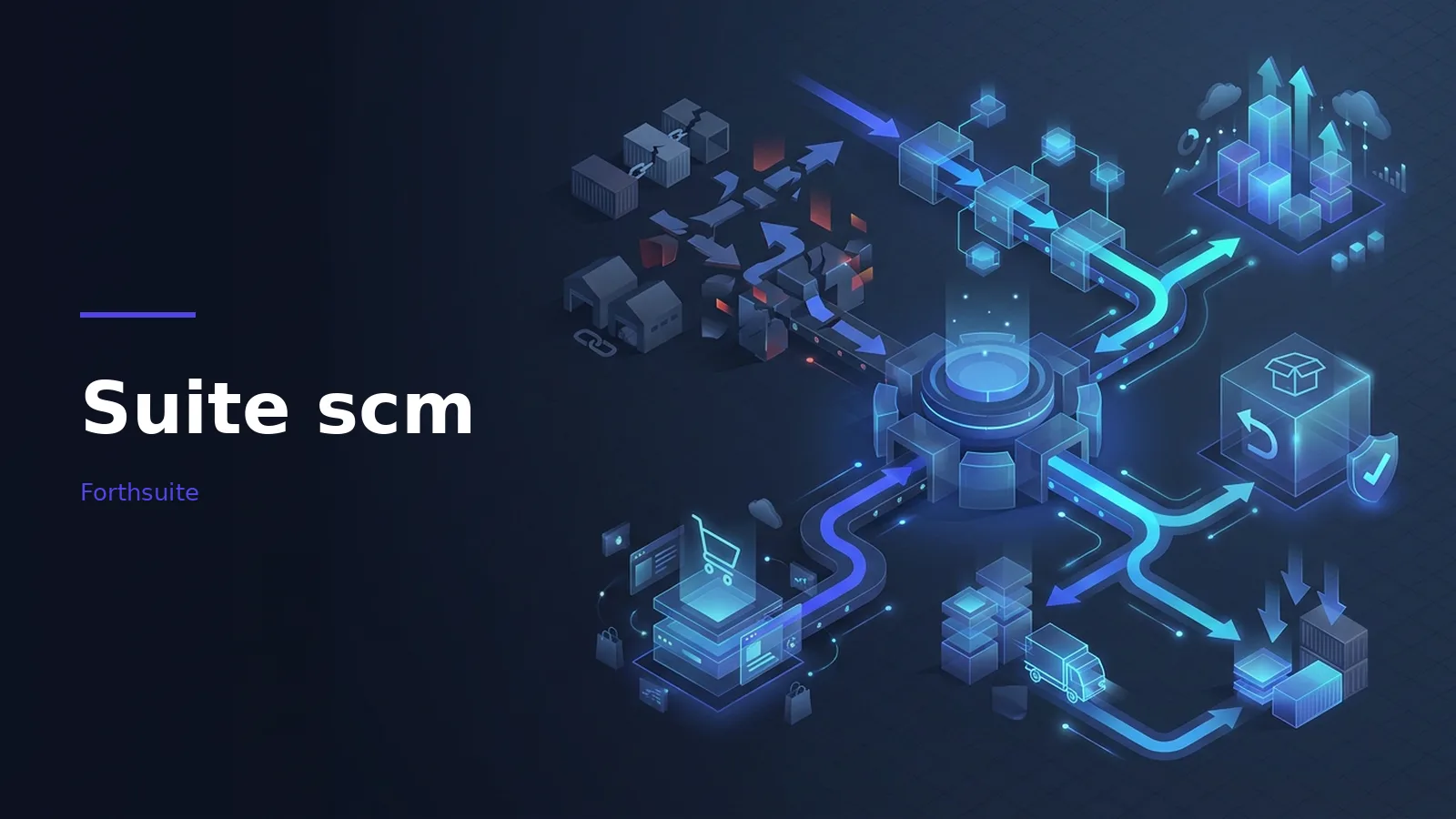
TL;DR: SAP SCM pricing is custom-quoted and varies depending on modules selected, deployment model, and enterprise licensing agreements. Forthsuite helps Shopify operators evaluate supply chain software investments by providing comprehensive guides and comparisons across inventory management, fulfillment, and procurement solutions.
Last updated: July 2026
SAP Supply Chain Management (SAP SCM) is an enterprise resource planning module integrated into SAP S/4HANA and SAP IBP (Integrated Business Planning), designed for large-scale manufacturers and retailers managing complex, multi-tier supply networks. Companies evaluating SAP SCM typically search for pricing information to budget for digital transformation projects, compare it against competing ERP systems, or assess total cost of ownership before engaging in lengthy procurement cycles. Because SAP targets enterprise customers with 1,000+ employees, pricing is negotiated individually rather than published on a rate card.
SAP SCM pricing model
SAP does not publish Supply Chain Management pricing publicly. SAP SCM is delivered as a component of the SAP S/4HANA suite or through SAP IBP, and operates on a custom enterprise licensing model. License fees are negotiated on a case-by-case basis, with costs determined by factors including:
- Total headcount and number of named users
- Company revenue
- Specific modules selected (demand planning, inventory optimization, logistics execution, etc.)
- Deployment model (cloud vs. on-premise infrastructure)
To receive a quote, enterprise buyers must contact SAP's sales team directly through their official contact form. Pricing is typically structured as annual or multi-year subscription agreements for cloud deployments, or perpetual licenses with annual maintenance fees for on-premise installations.
What drives SAP SCM's cost
SAP's enterprise licensing model reflects the complexity and scale of implementations required by Fortune 500 manufacturers and global retailers. Several commercial factors influence final contract value:
- User licensing: Costs scale with the number of employees accessing the system, whether through named user licenses or concurrent user models
- Module selection: SAP SCM encompasses demand planning, supply network planning, manufacturing execution, logistics, and procurement—each module licensed separately or bundled
- Revenue-based tiers: SAP adjusts pricing based on customer annual revenue, treating enterprise clients differently from mid-market accounts
- Deployment architecture: Cloud instances (SAP BTP) carry subscription fees, while on-premise deployments require upfront capital expenditure plus ongoing maintenance contracts
- Implementation services: While not included in license fees, SAP and partner consulting fees for customization, integration, and change management often equal or exceed software costs
- Contract duration: Multi-year agreements typically secure volume discounts compared to annual renewals
The lack of transparent pricing reflects SAP's go-to-market strategy of selling comprehensive digital transformation rather than point solutions, requiring deep discovery before quoting.
How Forthsuite compares on price
Forthsuite uses a transparent, usage-based pricing model designed for Shopify merchants and mid-market brands. Core supply chain workflow tools—including returns management, 3PL accountability, and supplier verification—are available free.
Forthcast, our demand forecasting engine, starts at $19.99/month with no hidden fees or enterprise sales cycles.
This pricing structure makes Forthsuite accessible to fast-growing DTC brands, multi-channel retailers, and operations teams that need supply chain coordination without six-figure implementation budgets. There are no user-based licensing fees, no mandatory professional services contracts, and no annual revenue minimums. Merchants can start with free tools and add Forthcast forecasting when demand planning becomes critical.
Forthsuite is purpose-built for the Shopify ecosystem, meaning setup takes hours instead of months. For companies running on Shopify rather than SAP ERP, Forthsuite delivers supply chain orchestration at a fraction of enterprise software cost—while integrating natively with the commerce platform already running your business.
| Comparison factor | SAP SCM | Forthsuite |
|---|---|---|
| Published pricing | SAP does not publish Supply Chain Management pricing publicly | Transparent, published pricing (most apps free) |
| Pricing model | Custom enterprise licensing negotiated case-by-case on headcount, named users, company revenue, modules and deployment model | Core supply chain workflow tools free; Forthcast starts at $19.99/month |
| Contract shape | Annual or multi-year subscription for cloud, or perpetual licences with annual maintenance for on-premise | No user-based licensing fees, no mandatory professional services contracts, no annual revenue minimums |
| Time to value | Requires deep discovery before quoting; implementation services often equal or exceed software costs | Setup takes hours instead of months |
| Built for | Fortune 500 manufacturers and global retailers | Shopify merchants and mid-market brands |
Is SAP SCM worth the cost?
For Fortune 500 manufacturers with complex bill-of-materials, global distribution networks, and existing SAP ERP investments, SAP SCM delivers unmatched depth and integration. The custom pricing model reflects legitimate enterprise complexity—multinational supply chains require sophisticated planning systems.
However, for Shopify merchants and mid-market retailers, SAP's licensing model, implementation timeline, and total cost of ownership far exceed what's necessary to manage inventory, forecast demand, and coordinate with 3PLs effectively.
Pricing accuracy note: SAP SCM pricing sourced from https://www.sap.com/products/scm/contact.html and verified on 2026-05-16. Pricing is subject to change — confirm current rates directly with SAP SCM before signing.
Why SAP SCM implementation costs often exceed software licensing
When evaluating SAP SCM, most organizations discover that the software license fee represents only a portion of total investment. Implementation, integration, and training typically consume significant budget and timeline resources.
SAP implementations often require dedicated project management, data migration from legacy systems, custom configuration of workflows specific to your supply chain, and extensive staff training across purchasing, planning, demand, and logistics teams.
The complexity grows when you consider system integration. SAP SCM must connect to your ERP backbone, warehouse management systems, transportation providers, and supplier networks. Custom API development, middleware platforms, and data synchronization requirements add layers of consulting and technical work. Many organizations underestimate these "hidden" costs until they are deep into a project with committed resources.
Additionally, post-launch support differs from deployment. Once live, your organization needs dedicated staff or ongoing support contracts to manage system performance, handle data quality issues, optimize configurations as business processes evolve, and troubleshoot integration failures. Some companies allocate internal IT resources; others contract extended support from SAP partners, which carries its own recurring expense.
SAP SCM deployment model trade-offs: cloud versus on-premise
Choosing between SAP's cloud deployment (SAP BTP) and on-premise infrastructure shapes both pricing and operational responsibility. Cloud deployments typically use subscription-based annual or multi-year contracts, providing predictable costs, automatic updates, and reduced infrastructure burden.
Your organization outsources server management, security patching, and disaster recovery to SAP, which simplifies operations for IT teams.
On-premise deployments require upfront capital investment in servers, storage, networking infrastructure, and physical security. You also assume responsibility for system maintenance, security updates, backup and recovery, and performance tuning. While the perpetual license model may feel like ownership, the ongoing operational costs—infrastructure, staffing, utilities, security—often exceed initial expectations over time.
Many mid-market and enterprise organizations lean toward cloud for predictability and reduced IT overhead, especially when budgeting multi-year transformations. However, companies with strict data residency requirements, heavily customized legacy integrations, or existing on-premise infrastructure investments may justify on-premise deployment despite higher complexity.
How to evaluate SAP SCM against your supply chain needs
Before requesting an SAP quote, assess whether enterprise-grade complexity aligns with your actual operational requirements. SAP SCM excels at managing intricate multi-tier manufacturing networks, demand-supply balancing across hundreds of SKUs, and global logistics coordination.
If your supply chain involves dozens of suppliers, multiple warehouses, complex manufacturing workflows, or highly regulated procurement, SAP's breadth of functionality justifies investigation.
However, evaluate whether you need all available modules or only specific capabilities. Demand planning and inventory optimization may address your immediate pain points without committing to the full logistics execution and manufacturing modules. Similarly, assess whether your team can absorb the learning curve and organizational change that SAP implementations demand. Dedicated resources, executive sponsorship, and willingness to standardize processes around SAP's methodology significantly influence success and total cost.
What questions should you ask SAP before committing to pricing discussions?
When contacting SAP, clarify scope before they quote. Ask which specific modules your use case requires rather than accepting a full suite proposal.
Confirm whether pricing includes cloud infrastructure or if you'll pay separately for compute, storage, and data transfer. Request clarity on training and change management costs, as these often surprise organizations. Ask about contract flexibility—whether you can expand or reduce licensing if business needs shift. Finally, request references from comparable companies in your industry to understand realistic implementation timelines and actual costs incurred, not just software fees.
Part of the Shopify Supply Chain Software guide. Related: Manhattan Associates pricing.
What you get
The build is shaped around your workflow rather than sold as a fixed feature set, drawing on the individual Forth apps for forecasting, returns, 3PL monitoring and surplus so you are not paying for modules you will not use.
Frequently Asked Questions
How much does supply chain management software cost?
SAP does not publish SCM/IBP pricing publicly in 2026; costs depend on modules selected, deployment model, and enterprise licensing agreements. However, SAP does not publish pricing publicly and negotiates costs on a case-by-case basis based on factors like total headcount, company revenue, and specific modules selected. Alternative solutions like Forthsuite offer transparent pricing starting at $19.99/month for demand forecasting, with core supply chain tools available free for Shopify merchants.
How much does SAP SCM cost in 2026?
TL;DR: SAP does not publish SCM pricing publicly in 2026; costs are negotiated case-by-case based on modules selected, deployment model, and enterprise licensing agreements. Forthsuite's companion apps cover demand forecasting, sourcing, returns, 3PL monitoring and overstock liquidation for Shopify operators, working toward one end-to-end supply-chain stack.
About the Author

Hylke Reitsma is co-founder of Forthsuite and a supply chain specialist with 8+ years of hands-on experience at Shell, Verisure, and Stryker. He holds an MSc in Supply Chain Management from the University of Groningen and writes practical guides to help e-commerce teams run leaner, faster supply chains. Selected by Replit as 1 of 20 founders for the inaugural Race to Revenue Cohort #1 (2026) and certified as a Replit Platform Builder.
LinkedIn